Peter Brock Obituary, Death – Australian Motorsport Legend Remembered 20 Years After His Fatal Rally Crash
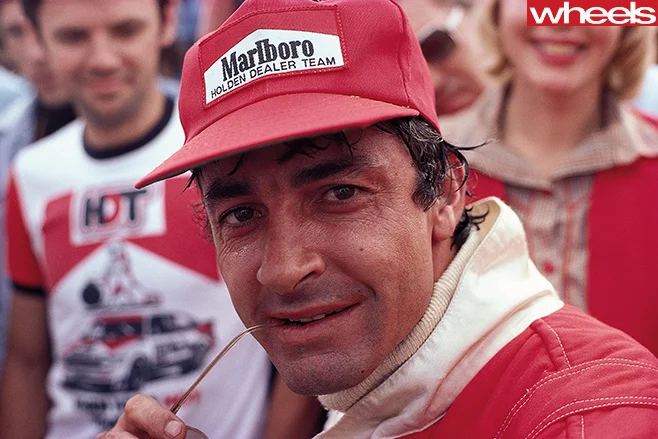
Peter Brock remains one of the most recognizable names in Australian motorsport, two decades after his death during a road rally in Western Australia.
Known affectionately as “Brocky,” Brock built a remarkable career behind the wheel while developing a public persona that could shift effortlessly depending on the people and circumstances around him. To some, he was a larger-than-life racing hero. To others, he was simply a mate who could make them feel important with a smile, a few words or a moment of attention.
That unusual ability to connect with people became one of the defining characteristics of his life and career.
The Many Sides of Peter Brock
Brock was often described as something of a chameleon. He could move from being the celebrated motorsport star to the relaxed, approachable man at a pub or the polished corporate representative in a boardroom.
His popularity was built not only on what he achieved on the racetrack, but also on the personal connection he created with fans, customers, sponsors and fellow competitors.
For many supporters, meeting Brock was an experience they remembered for years. His appeal was so strong that numerous Australian families even chose “Brock” as a name for their sons in tribute to the racing icon.
Yet the question of who the real Peter Brock was remained something of a mystery even to those closest to him.
A few months before his death, when asked which version of himself was genuine, Brock reportedly paused before offering a remarkably candid response: “Sometimes I don’t even know myself.”
A Passion for Cars That Began Early
Brock’s fascination with engineering and cars was evident from his youth.
His brother Lewis Brock, who became particularly close to Peter during his later years and worked with him at the Holden Dealer Team, recalled how Peter had taken on a protective role when they were growing up.
The Brock brothers spent their childhood experimenting, building and exploring, with cars providing an early education in mechanical work.
Their father eventually bought Peter and his brothers an Austin 7, which became a project through which they learned about engineering and mechanics. Peter’s determination to make cars perform despite their mechanical shortcomings became an early indication of the persistence that would later define his racing career.
Lewis also remembered Peter’s talent on the football field. During their time playing in the Diamond Valley Football League, Peter was a strong-marking key forward while Lewis played as a rover.
According to his brother, Peter could have pursued football further, but his interest in engineering, vehicle design and high-performance motorsport ultimately proved stronger.
Rivalry With Dick Johnson
One of the most enduring chapters of Brock’s career was his rivalry with fellow Australian racing great Dick Johnson.
For an entire generation, the two drivers represented the fierce Ford-versus-Holden competition that dominated Australian touring car racing. Their battles on the track were often separated by tiny margins, even though their public personas away from racing were dramatically different.
Johnson became associated with the image of the laconic Brisbane working-class hero, while Brock developed a more polished Melbourne identity.
The two had actually crossed paths earlier than many people realized. Both served during National Service and were stationed only a short distance from one another, although neither initially knew of the other’s presence.
Johnson later recalled one of his favorite stories involving Brock and a small boat. Brock had modified a rubber dinghy with a steering wheel and took it out with Johnson’s son Steven. When Brock turned the wheel one way, the boat unexpectedly went in the opposite direction.
The incident became another example of the colorful personality Johnson associated with his longtime rival.
Resilience Through Professional Setbacks
Alan Gow, who later became a prominent motorsport executive, remembered another side of Brock.
Gow met him through Peter Janson in the 1970s and came to know Brock away from the racetrack. He described Brock as someone who remained relentlessly forward-looking even after suffering major professional setbacks.
One of the most difficult periods came after the collapse of Brock’s relationship with the Holden Dealer Team.
Despite the public humiliation and professional difficulties that followed, Brock continued moving forward. Gow regarded his ability to recover from that period and return to the top level of competition as evidence of his resilience.
Brock went on to win Bathurst again in the same year as the crisis, reinforcing his reputation as a competitor capable of responding to adversity.
The Brock Lada
Another unusual chapter in Brock’s career involved the Lada Samara Deluxe.
Following the financial difficulties surrounding the HDT facility in Port Melbourne, Brock agreed to put his name behind a run of Lada vehicles as part of an arrangement that helped resolve the situation.
The car was officially known as the Lada Samara Deluxe by Brock, although Brock privately gave it another nickname – the “Doreen Deluxe.”
The decision was driven in part by practicality. Brock faced the prospect of significant personal financial consequences if the arrangement failed, and the deal helped protect his property near Doreen.
The episode demonstrated another aspect of Brock’s character: despite his public image, he could be pragmatic when circumstances demanded it.
The Energy Polarizer Controversy
Brock’s extraordinary reputation also came with controversy.
His involvement with the Energy Polarizer became one of the more contentious episodes of his career. Motoring journalist Phil Scott, who worked at Wheels and Fairfax newspapers, was among those who reported critically on the device and its claims.
Scott believed Brock had an exceptional ability to cultivate relationships with media representatives and sponsors but could react strongly when he felt someone had turned against him.
Despite the controversy, Scott acknowledged Brock’s extraordinary ability behind the wheel, particularly his connection with Mount Panorama.
The Energy Polarizer episode ultimately became part of the more complicated legacy surrounding a driver who had achieved almost mythical status in Australian motorsport.
A Legacy That Endures
Peter Brock died 20 years ago while competing in a road rally in Western Australia, bringing an abrupt end to the life of one of the country’s most celebrated racing personalities.
His legacy, however, has continued well beyond his death.
For generations of Australian motorsport fans, Brock represented speed, competition, personality and the uniquely powerful relationship between a driver and the public.
He was simultaneously a champion racer, businessman, public figure, teammate, brother, father and friend. The different descriptions of him did not necessarily contradict one another; together, they reflected the many sides of a complicated and highly charismatic individual.
His brother Lewis remembered a protective older sibling. Dick Johnson remembered a fierce rival and an entertaining friend. Alan Gow remembered a resilient man capable of rebuilding after professional adversity. Others saw a sporting hero whose ability to connect with ordinary fans helped make him extraordinary.
Perhaps that complexity explains why Peter Brock remains such a lasting figure.
Twenty years after his death, the name Brocky continues to carry enormous weight in Australian motorsport, and his influence remains part of the country’s racing culture.
Peter Brock’s story was never simply about the cars he drove or the races he won. It was also about the people he encountered, the relationships he formed and the remarkable impression he left on generations of Australians.
May Peter Brock rest in peace.